Bulk fermentation used to be the part of sourdough that stressed me out the most. Every recipe gave me a number of hours, and every single time my dough looked nothing like the photo at that mark.
Here's what actually changed things for me: I stopped watching the clock and started reading the dough instead. These are the five signs I actually use to call sourdough bulk fermentation done, no timer required.
In this post
Why the Clock Doesn't Work
Your kitchen isn't the kitchen the recipe was written in. Room temperature, flour type, hydration, how active your starter was that morning, all of it changes how fast fermentation moves. The same recipe can take 4 hours in summer and 8 in winter, in the exact same house.
Bulk fermentation is where your dough builds both structure and flavor, so guessing wrong in either direction costs you the loaf. Too early and it's dense and tight. Too late and it loses the strength to hold its shape in the oven. A fixed hour count can't account for any of that. Your dough can.
5 Signs Sourdough Bulk Fermentation Done
I never call it based on just one of these. When most of them line up, I know it's time to shape.
-
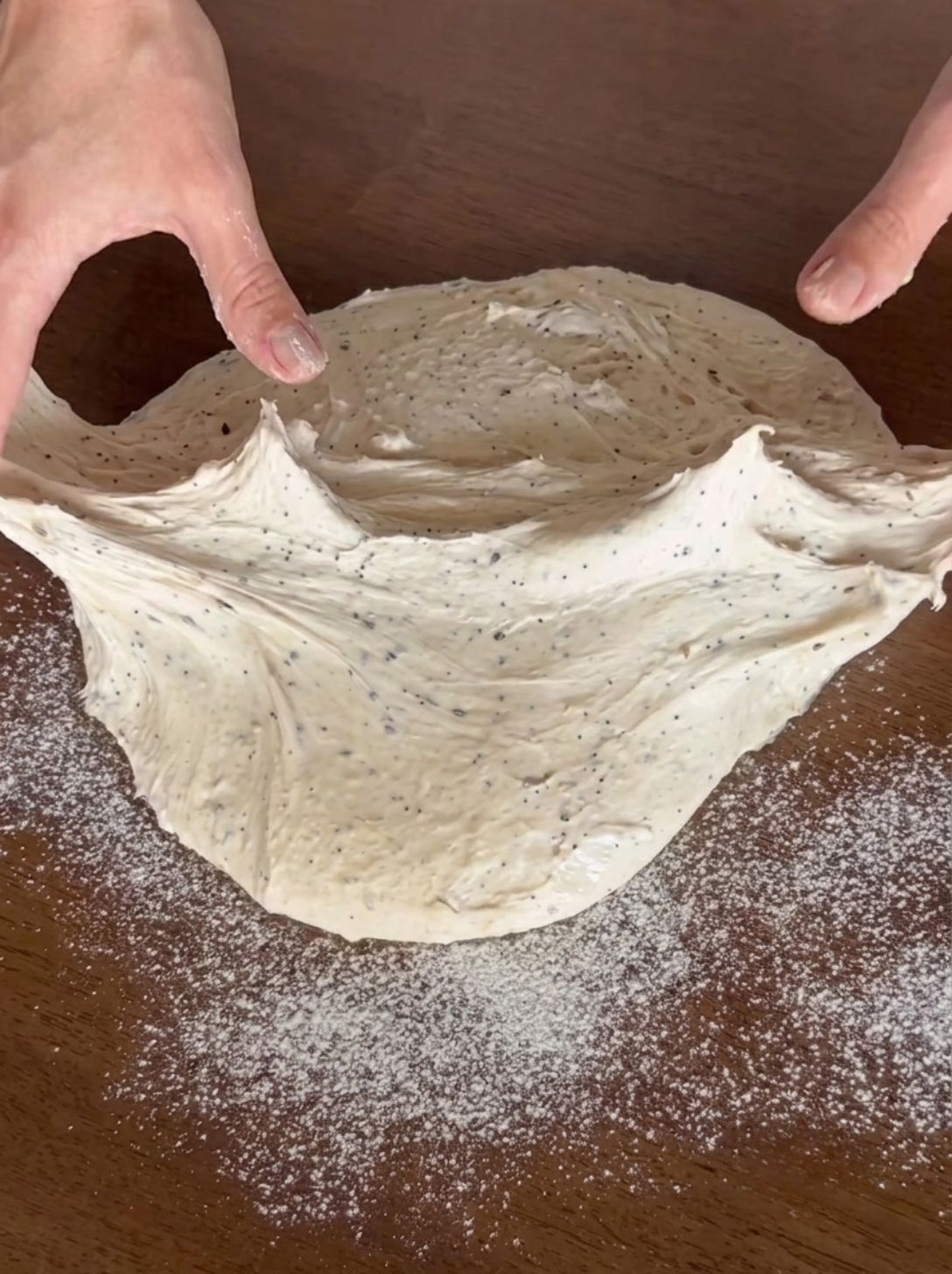 1It stops clinging to your fingers
At the start, dough sticks to everything. As gluten develops and fermentation progresses, it gets smoother and pulls away from your hand cleanly instead of stringing along with it.
-
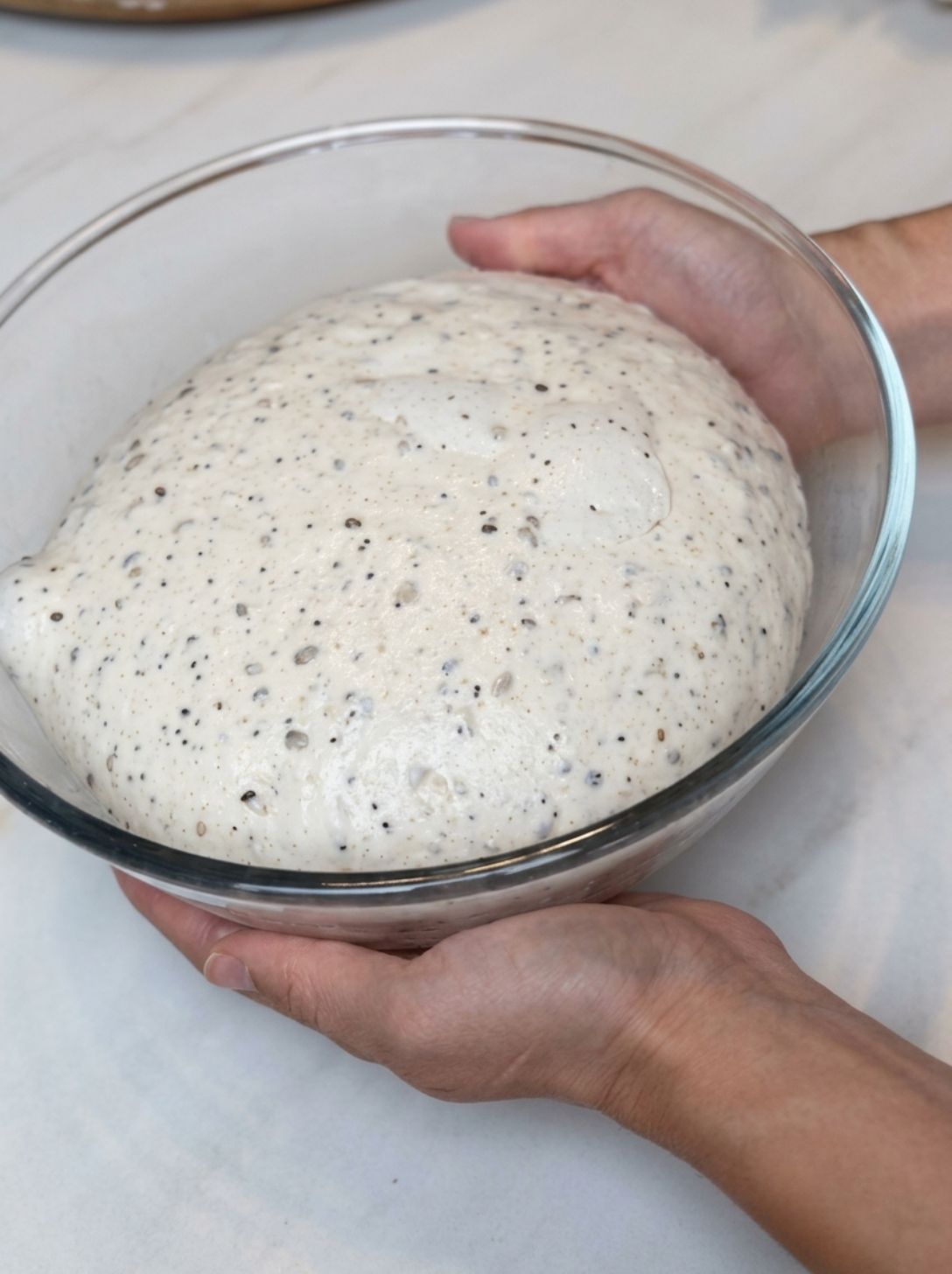 2The surface domes and jiggles
A well-fermented dough rounds out on top instead of sitting flat, and you'll see bubbles just under the surface. Give the bowl a gentle nudge. If it jiggles like it's got some life in it, that's the gas doing its job.
-
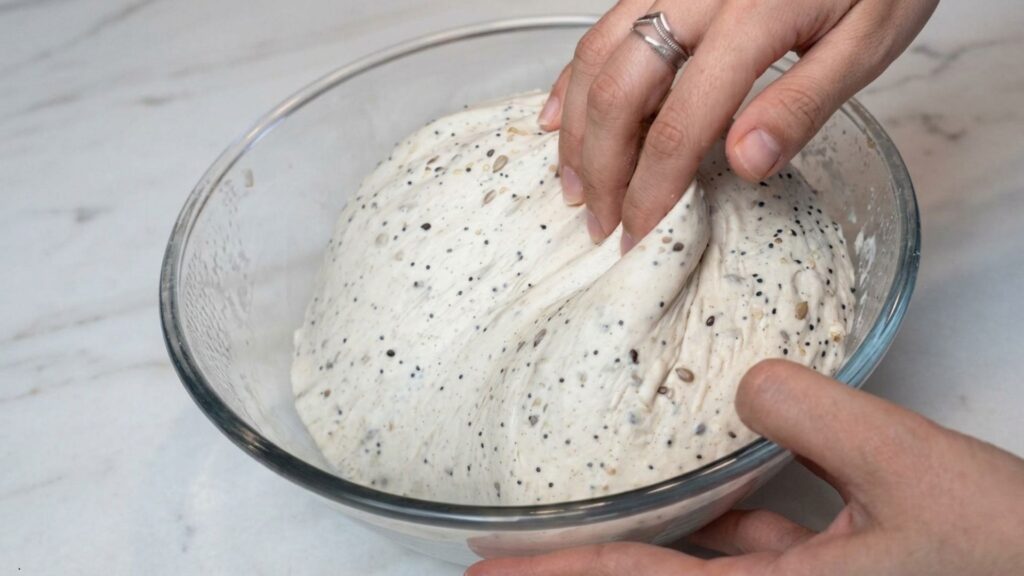
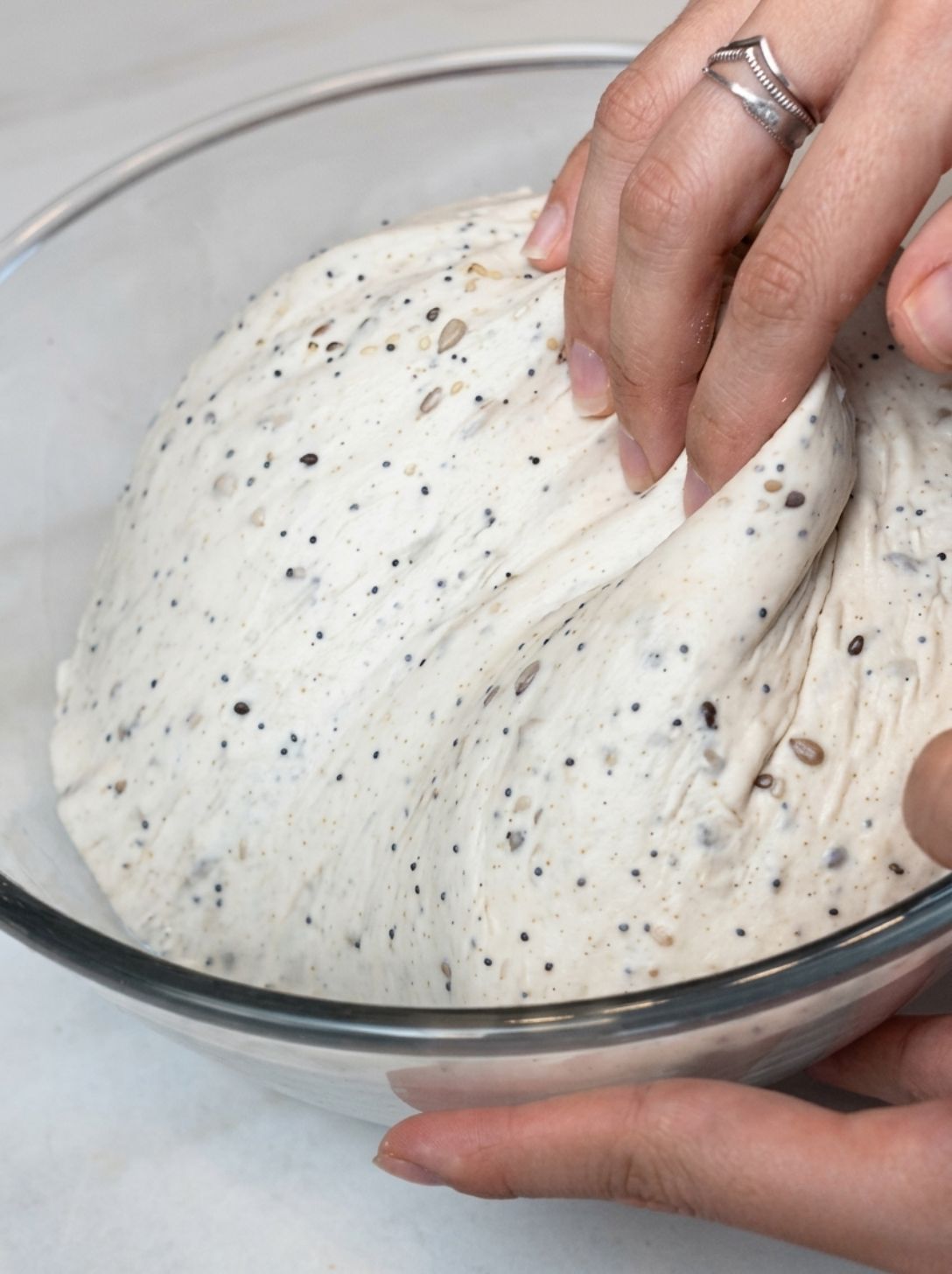 3It pulls away from the bowl on its own
Look at the edges. Early on, dough clings to the sides of the bowl all the way around. Once it's fermented well, you'll see it start to release from the bowl on its own, especially near the top.
-
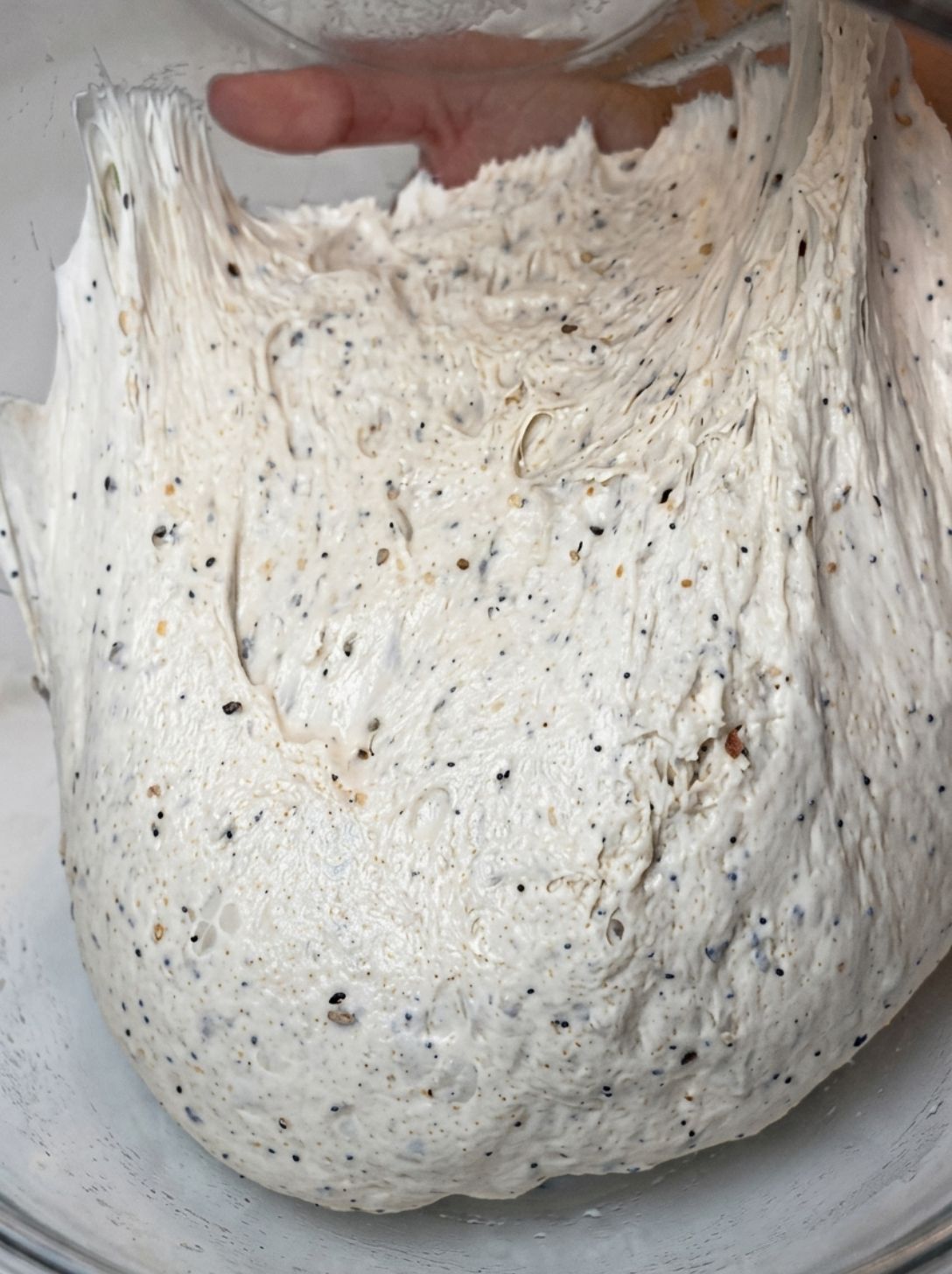 4It comes out in one piece
When you go to tip the dough out, well-fermented dough slides out mostly in one mass. If it's tearing, leaving chunks behind, or feels like it's fighting you, it usually needs more time.
-
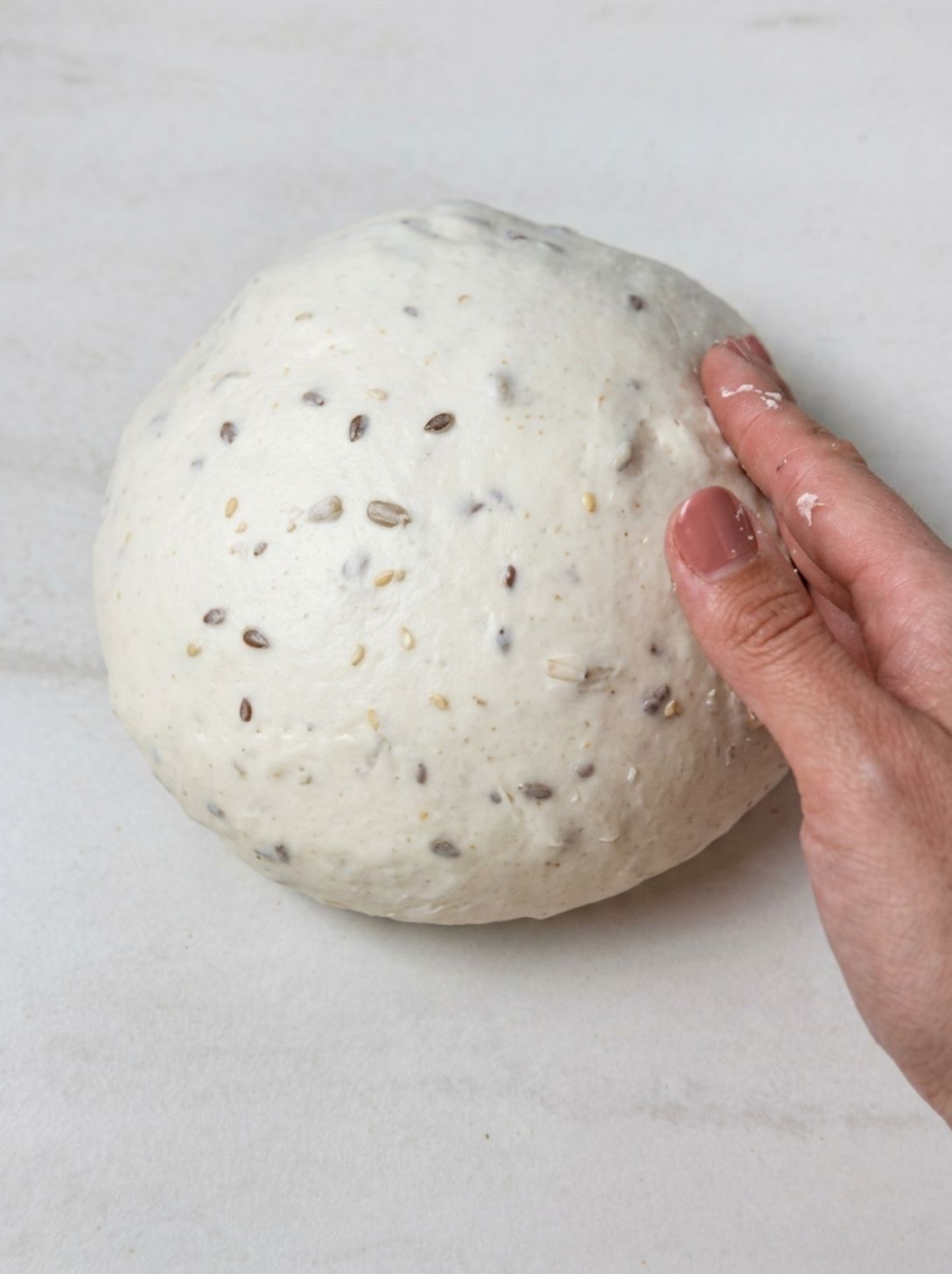 5It holds its shape after a gentle preshape
This is my final check. After a light preshape, the dough should hold a taut, rounded shape instead of slumping flat. If it spreads out immediately, the gluten isn't there yet.
Worth knowing
If your dough only shows two or three of these signs, give it more time and check again in 20 to 30 minutes. Under-fermented dough is far more forgiving than over-fermented dough, so when in doubt, wait.
Under vs. Over-Fermented
Under-fermented dough feels heavy and dense when you lift it, sits flat instead of doming, and smells mostly like flour, the fermented tang hasn't developed yet. Give it more time.
Over-fermented dough feels slack and a little torn, spreads out instead of holding a shape, and smells sharp or almost boozy instead of pleasantly tangy. If you're already there, shape it gently and get it into the fridge, a lighter touch is your best move at that point.
Tip
Temperature moves fermentation more than almost anything else. A dough that's ready in 4 hours on a warm day might need 7 or 8 in a cold kitchen. Check the signs, not the clock.
Trust the Dough, Not the Timer
These timings worked in my kitchen, but your dough may need more or less depending on your flour, your starter, and your room. That's not a flaw in the recipe, it's just how fermentation works.
The goal was never to hit a specific number of hours. It's learning to recognize when your dough, in your kitchen, is actually ready. That skill builds with every loaf you bake, and it gets easier a lot faster than you'd think.
If you want the full process from feeding your starter through cold proofing, my sourdough fermentation guide walks through every stage in more detail. And if you're not sure your starter itself is strong enough to ferment a dough well in the first place, check it against these 6 signs of a healthy starter.
Try these signs on my go-to plain sourdough loaf next time you bake, it's the simplest recipe to practice reading dough on before you try anything more complicated.
Back to top ↑Which sign do you rely on most? Tell me in the comments, or tag me in your next bake.
Browse more sourdough recipes