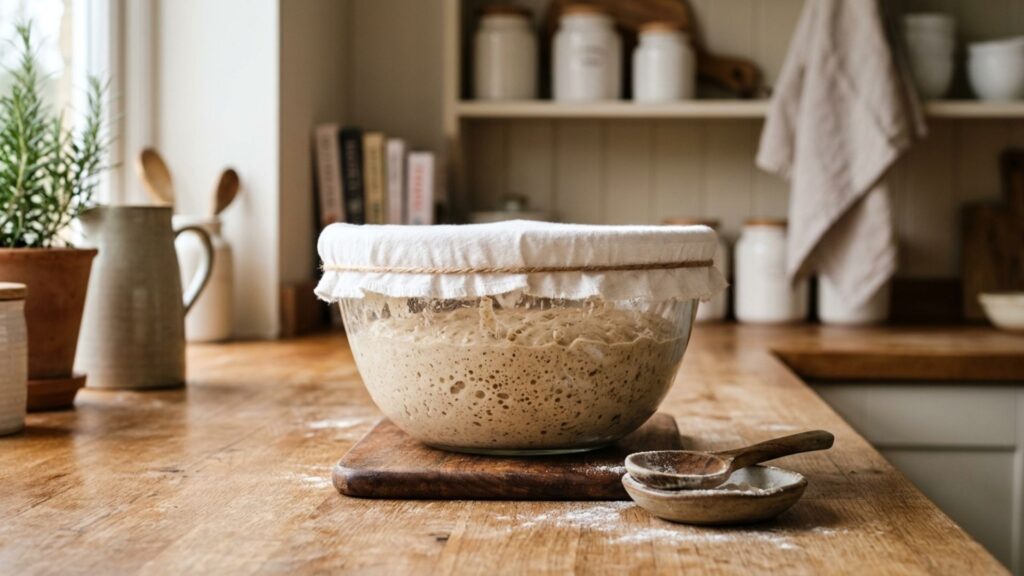
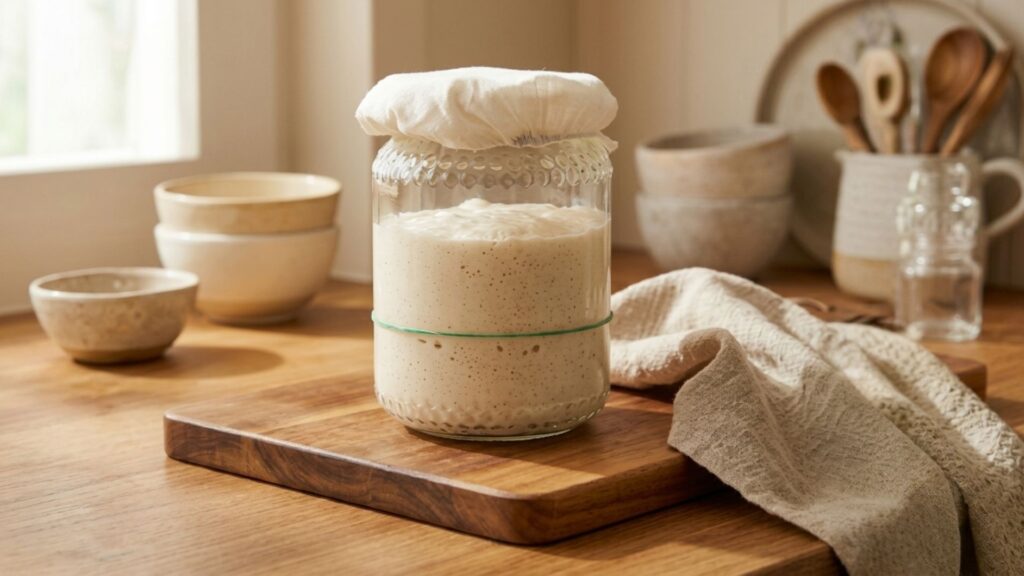
Every time I go to feed my starter, I run the same quick check before deciding it's ready to bake with. It's the difference between a healthy sourdough starter and one that just looks active.
Now that the weather's warmer, mine has been peaking a lot faster, so I've had to pay closer attention instead of feeding on autopilot. Temperature changes fermentation more than people expect, and your kitchen isn't my kitchen. Here's what I look for.
In this post
Why This Matters
A starter can look fine and still not have the strength to lift a loaf. Checking these signs before you mix your dough tells you whether it's ready to work, not just alive in the jar.
None of this is about hitting an exact hour or a specific number. It's about learning what your own starter looks like when it's genuinely strong, so you stop guessing every single feed.
The 6 Signs to Check
Here's what I look for, every time.
 1
1
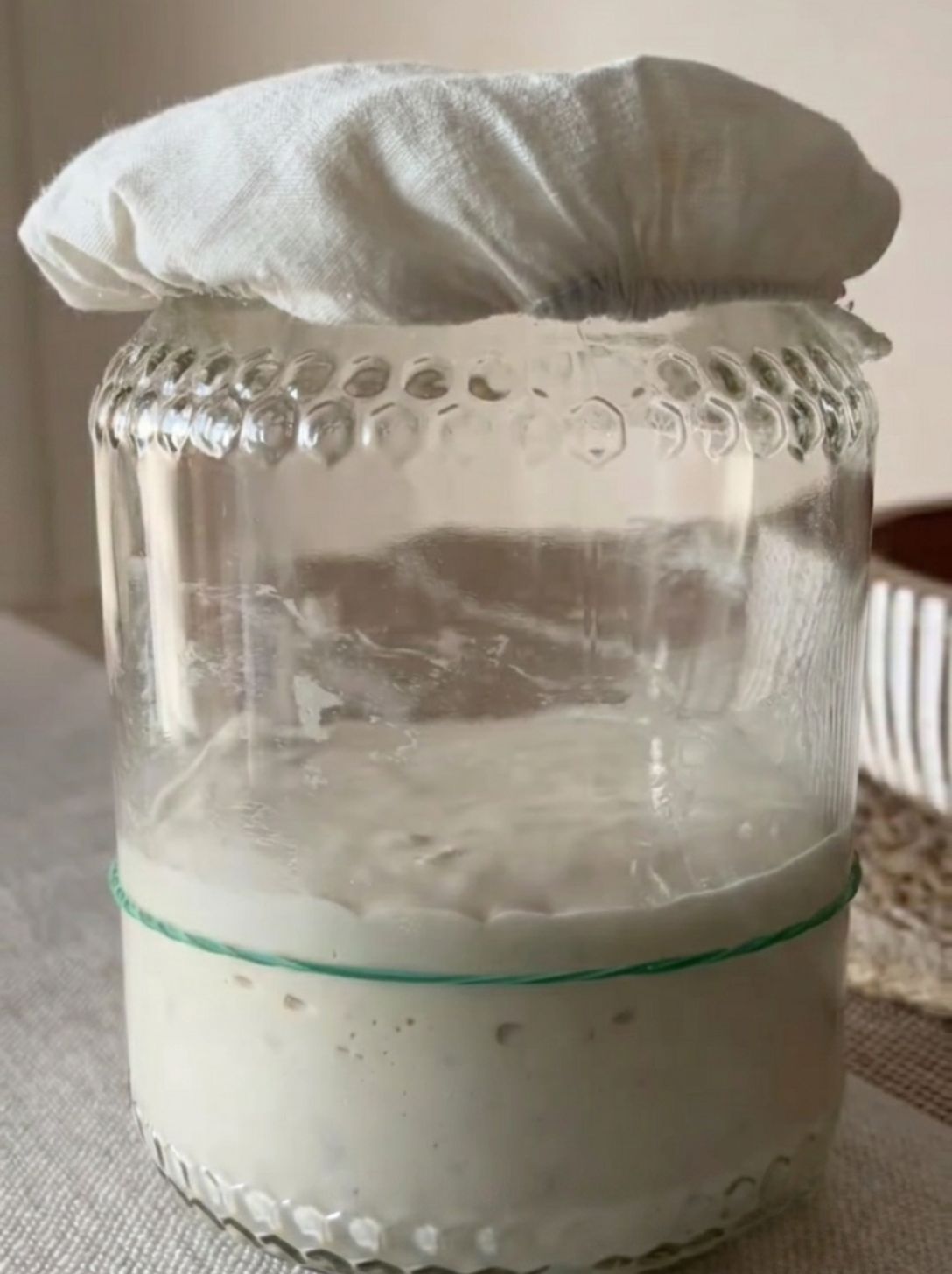
Predictable Rise After Feeding
It rises about the same amount every time you feed it under similar conditions. That consistency is what tells you it's stable, not just occasionally lucky.
 2
2
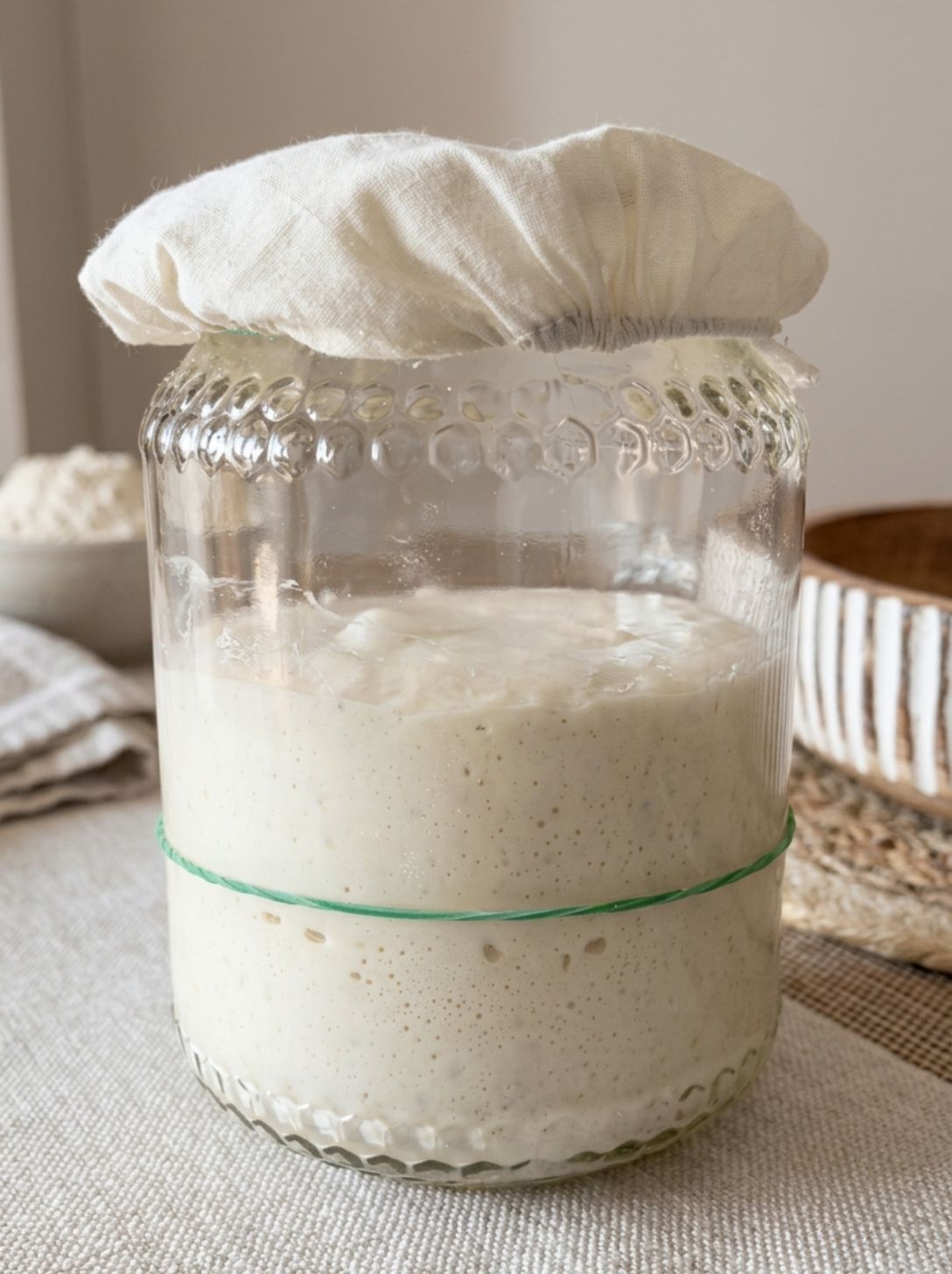
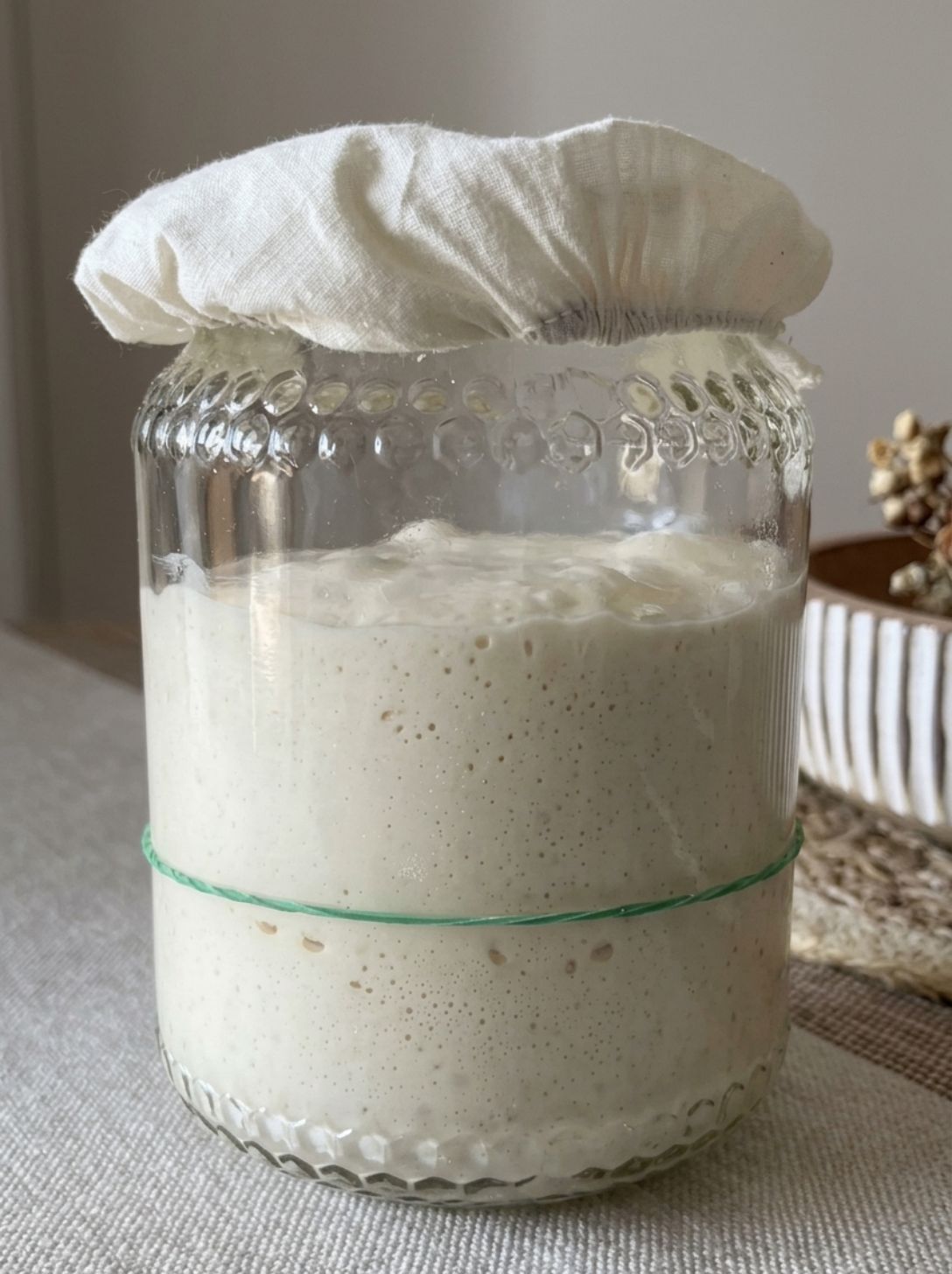
Bubbles Throughout, Not Just on Top
Look at the sides of the jar, not only the surface. Bubbles running all through it mean fermentation is happening evenly, not just where it touches air.
 3
3
Clean, Pleasant Smell
Mildly yeasty, a little fruity even. If it smells sharp or boozy, it's usually just hungry and out of balance, not dead.
 4
4
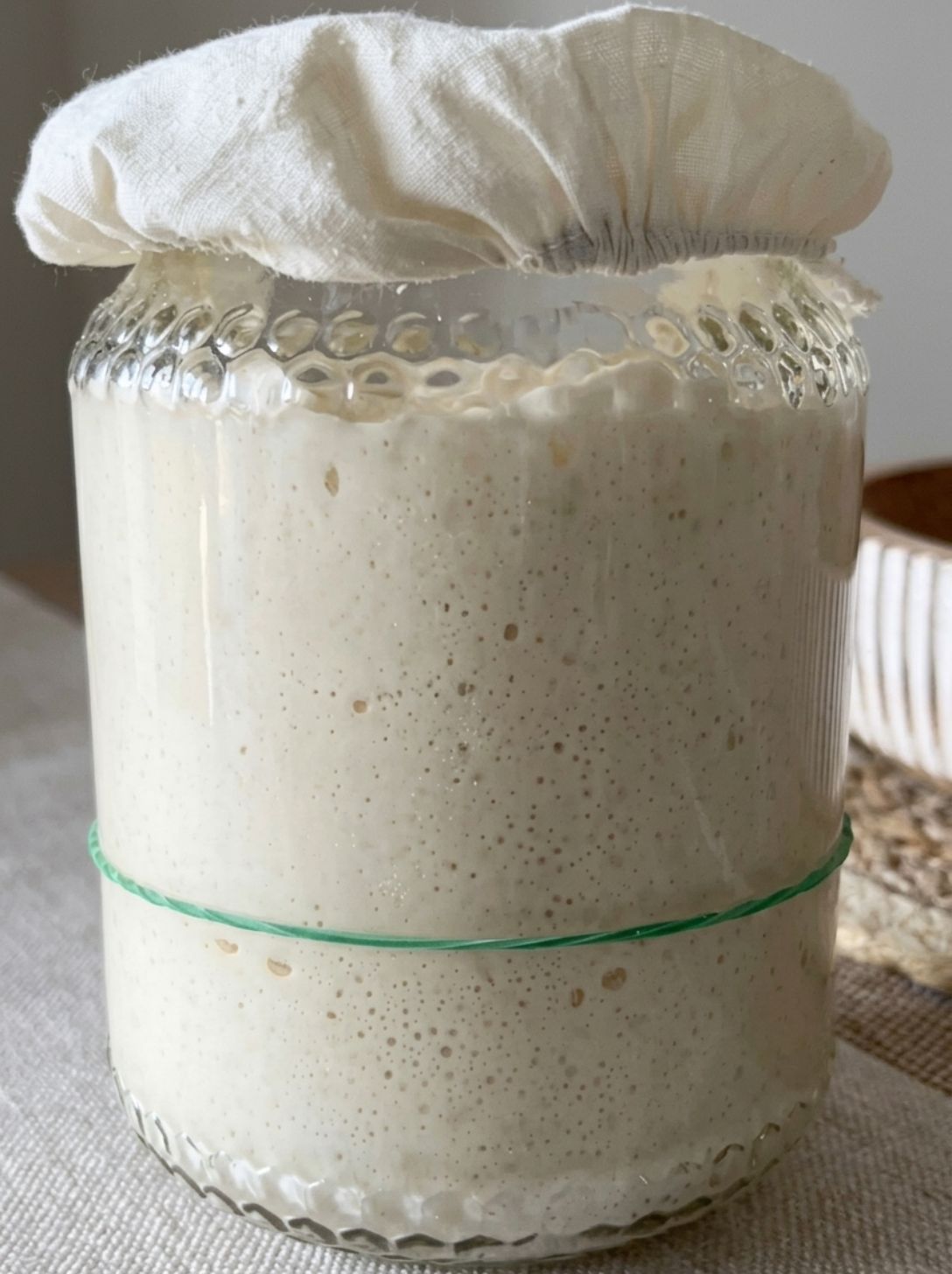
Rises Tall and Holds Its Height
A healthy starter climbs, holds near its peak for a while, then slowly falls back. That hold is what you're watching for, not just the climb.
 5
5
Recovers Well After Each Feed
Give it a feed and it should bounce back with energy, not limp along. Quick recovery is one of the clearest strength signals there is.
 6
6
Airy, Webby Texture Inside
Scoop into the middle, not just the top. It should look fluffy and full of holes, not dense or gluey.
Worth remembering: every kitchen is different. Learning your own starter's rhythm matters more than following someone else's exact timing, mine included.
What To Do With This
If your starter checks these boxes, it's ready. Feed it, wait for peak, and bake.
If it's close but not quite there, don't panic and don't dump it. Feed it again and give it a bit more time before you write it off. Once you're seeing these signs consistently, this is exactly where I'd put a starter to work, my go-to plain sourdough loaf is the simplest place to start.
Come Say Hi
More starter checks, real bakes, and real fails
I post this kind of thing on Instagram all the time, not just the pretty crumb shots.
Follow Us on IG