Every time I feed my starter, there's a little jar of discard left behind. For a long time I felt vaguely guilty scraping it into the bin, like I was throwing away something I was supposed to be more resourceful with. Turns out I was, I just hadn't found its jobs yet.
Discard isn't a strong enough leavener to carry a loaf on its own, but it brings flavor, tang, and moisture to all kinds of things that aren't bread at all. Here's what's actually earning a place in my kitchen these days, plus a few basics if you're new to using yours.
In this post
Wait, Isn't Discard Just... Waste?
Quick refresher if you're newer to sourdough: every time you feed your starter, you're usually removing a portion of it first, that portion is the discard. It keeps your starter from growing into an unmanageable tub and keeps the ratio of flour to starter balanced so it stays healthy and active.
The discard itself is still full of flavor, wild yeast, and bacteria, it's just not fed enough to have the rise power a fresh, active starter has. Which is exactly why it's so good in things that don't need a big rise to begin with, or that get their lift from somewhere else (a little instant yeast, eggs, baking soda, or just time).
🔍 One way, not the only way
Some bakers keep their discard in a separate jar in the fridge and build it up over a week before baking with it. Others use it fresh, straight from that day's feed. Both work, this is just what's worked for me.
Why I Stopped Tossing Mine
Honestly, it came down to not wanting to waste something I'd spent time nurturing. A starter is basically a pet you feed daily and never get to pet back, the least I could do was stop throwing part of it away every few days.
Once I started treating discard as an ingredient instead of a byproduct, it opened up a whole side of baking that has nothing to do with loaves at all. Buns, rolls, focaccia, crackers, all of it gets a little more depth and a gentle tang from a spoonful of discard, even in recipes that lean on other leaveners to actually rise.
Three Things I Actually Bake With It
These are the three that have earned a permanent spot in my discard rotation. None of them require a bubbly, freshly-fed starter, just whatever's sitting in the jar.
🥐 Sweet Potato Sesame Buns
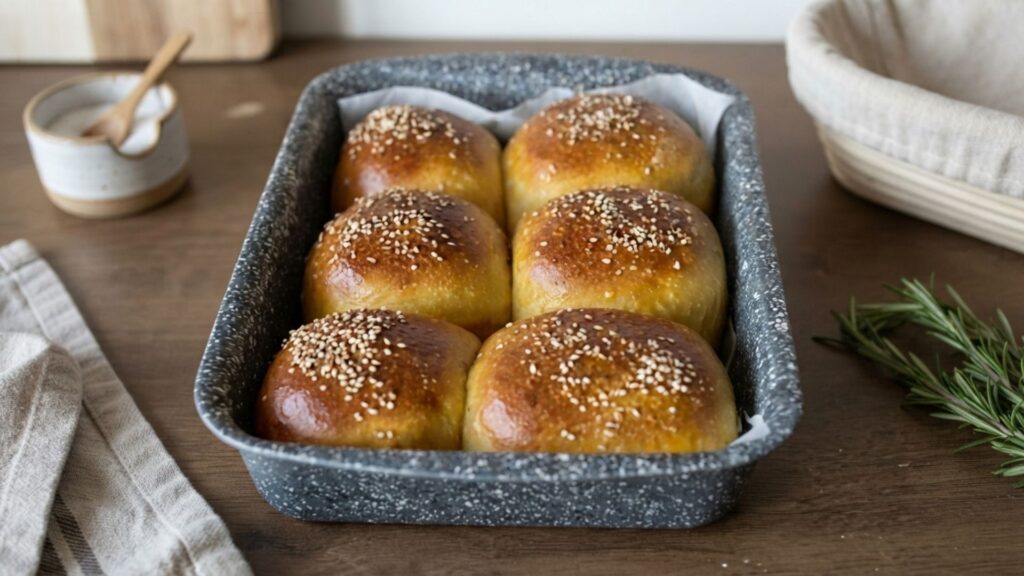
Soft, pull-apart buns made with roasted sweet potato, a touch of honey, and a sesame-crusted top. The discard works alongside a small amount of yeast here, so you still get a good rise without needing an active starter. These came out of the oven looking like something from a bakery window, and they disappeared just as fast.
Get the recipe →🍵 Matcha Cinnamon Rolls
An enriched, discard-based dough rolled around a dark chocolate and pecan filling, topped with a cream cheese and mascarpone glaze. The matcha is genuinely optional if it's not your thing, the discard is what gives the dough that little extra softness and flavor underneath everything else.
Get the recipe →🍓 Chocolate and Strawberries Sourdough Focaccia
A cocoa-swirled focaccia dough, dimpled and studded with fresh strawberries, finished with a maple mascarpone drizzle while it's still warm. I usually consider myself savory-over-sweet, this one made me reconsider that rule entirely.
Get the recipe →💡 Note for later
Links above will go live as each recipe is published, check back soon if one you want isn't up yet.
A Few Notes Before You Start
- Your discard doesn't need to be bubbly or recently fed for any of these, straight out of the fridge is fine.
- If a recipe leans on discard for structure as well as flavor, a slightly older, more sour discard will come through more in the final taste, a fresher one will be milder. Neither is wrong, it depends what you're going for.
- Keep an eye on hydration. Discard is roughly half flour and half water by weight in most feeding ratios, so swapping it into a recipe that wasn't built around it can throw off the dough's texture if you're not accounting for that liquid.
- If you don't bake often enough to build up a jar of true discard, this is also a perfectly good use for a starter you're reviving after time in the fridge and want to get some use out of before it's fully active again.
There's something satisfying about a starter that pulls its weight beyond the loaf. If you've got a jar of discard sitting in your fridge right now, I'd start with whichever of these three sounds best to you, and tell me how it goes.
↑ Back to topGot your own favorite way to use discard? I'd love to hear it.
Explore More Recipes