One last hurrah for summer, even though it's still about a million degrees out here. These mediterranean sourdough breadsticks are not the worst idea, aside from the part where you actually have to turn the oven on. They're 100% worth it.
Walnuts, olives, sun-dried tomatoes, and capers, all folded into a sourdough base and twisted into snackable strips. Serve them with your favorite dip and watch a whole tray disappear.
What's in This Post
What Goes Into These Breadsticks
Nothing complicated here. A basic sourdough base gets loaded with a handful of pantry staples that all happen to taste like summer in the Mediterranean.
Ingredients
- 300g bread flour (13% protein)
- 240g water
- 70g active sourdough starter
- 10g olive oil
- 6g salt
- Chopped walnuts, to taste
- Olives, pitted and chopped, to taste
- Sun-dried tomatoes, chopped, to taste
- Capers, drained well, to taste
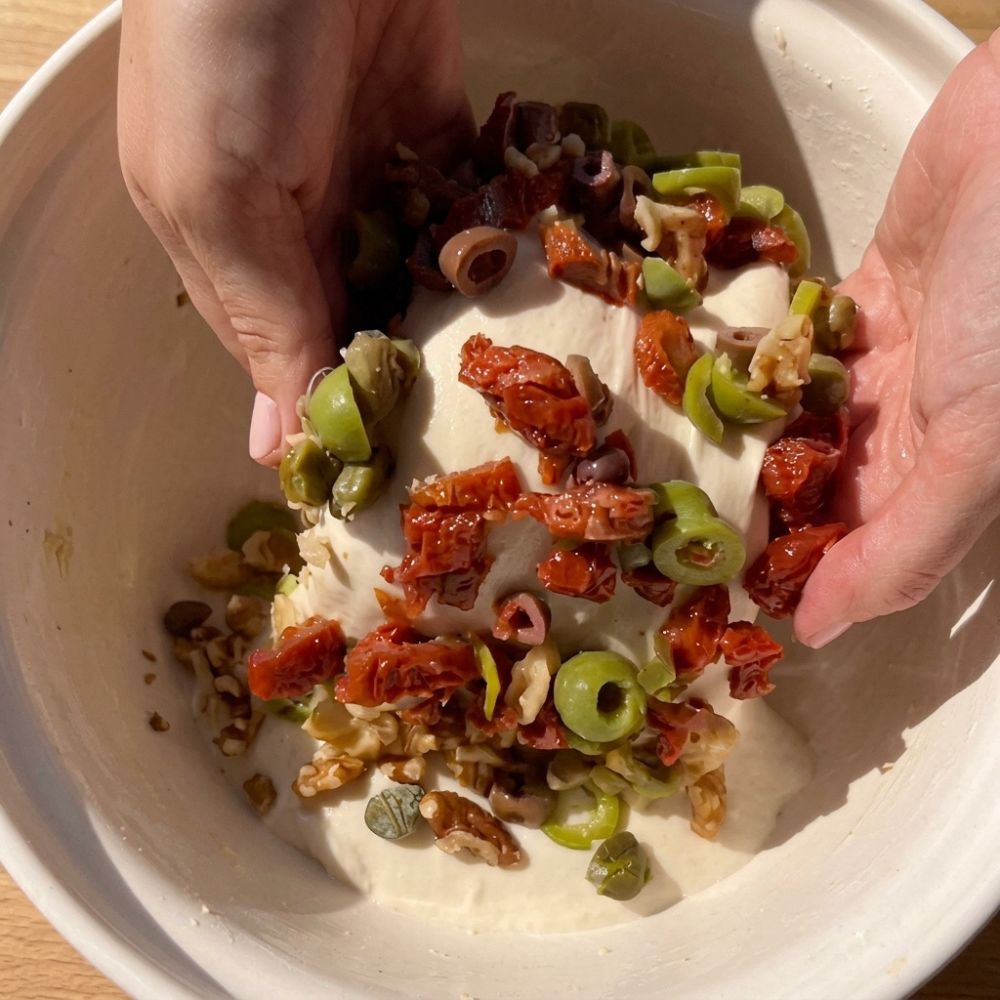
Folding the walnuts, olives, sun-dried tomatoes, and capers into the dough.
How to Make Mediterranean Sourdough Breadsticks
The dough comes together the same way most of my loaves do, just scaled down and folded into strips instead of a boule. Here's the full method.
- Mix the flour, water, starter, and olive oil until a shaggy dough forms. Cover and rest 30 minutes.
- Work the salt into the dough.
- Perform 2 sets of coil folds, spaced 30 minutes apart.
- Before the 3rd coil fold, scatter the walnuts, olives, sun-dried tomatoes, and capers over the dough, then fold to trap them inside. Rest 30 minutes.
- Go in with a last set of coil folds.
- Cover and refrigerate overnight (I did 24 hours for this batch).
- Tip the cold dough onto a well-floured surface. Cut into 6–7 strips.
- Twist the ends of each strip in opposite directions, then place on parchment to form a twisted breadstick.
- Proof at room temperature for about an hour, until visibly puffed.
- Bake on a preheated steel at 240°C (465°F) with steam for 15 minutes. Remove the steam, drop the temperature to 220°C (430°F), and bake for about 15 more minutes, until golden.
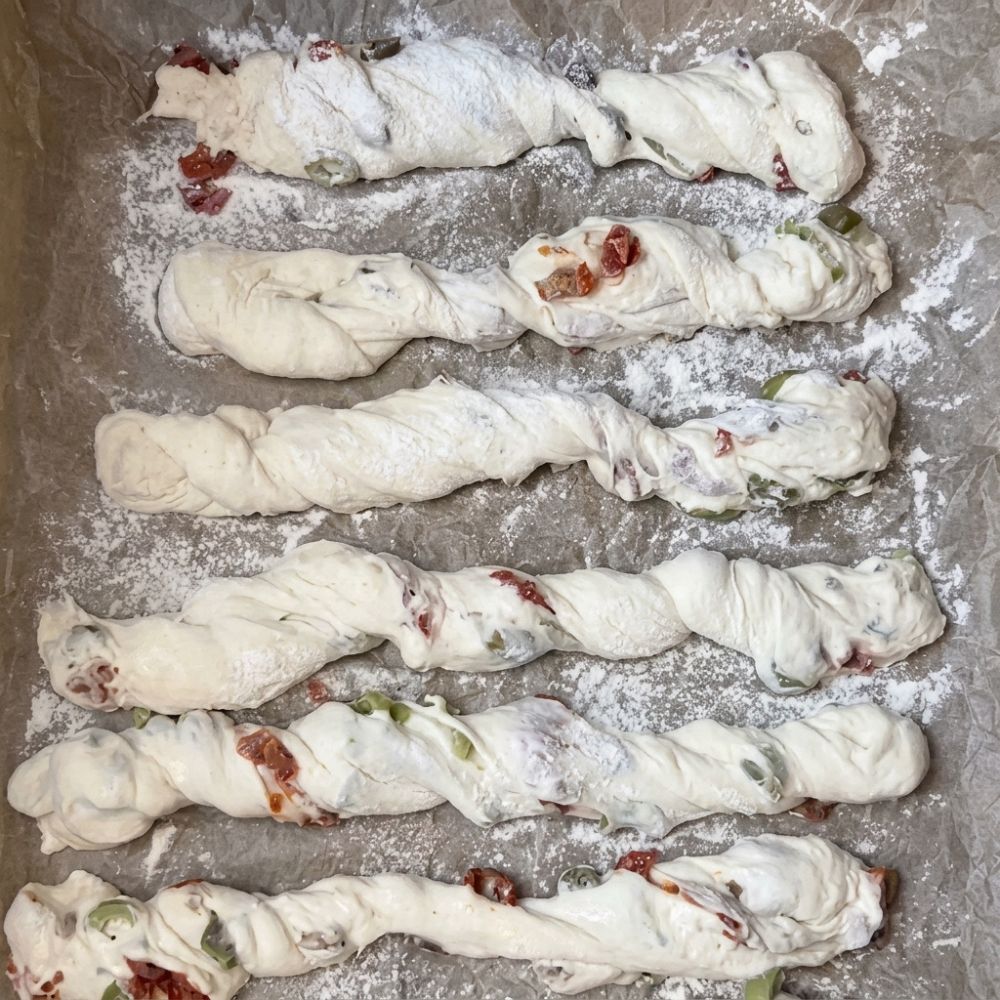
Twisted and ready for their final proof.
Shaping and Baking Tips
The mix-ins go in later than usual on purpose. Two sets of folds happen first so the gluten has already built some structure, then the walnuts, olives, tomatoes, and capers get folded in on the 3rd set. Heavier, bulkier add-ins like these tend to sit better in a dough that already has some strength to hold them, instead of forcing everything to stretch and tear around them from the start.
Twist gently. You're not trying to squeeze the filling out, just create that spiral shape. If a piece of olive or sun-dried tomato pokes through the surface, leave it. It'll caramelize a little in the oven and that's a good thing.
My roasted garlic and herbs sourdough uses this same later-fold timing for its mix-ins, so if you want to see the technique applied to a full loaf instead of breadsticks, that's a good next read.
Serving Ideas
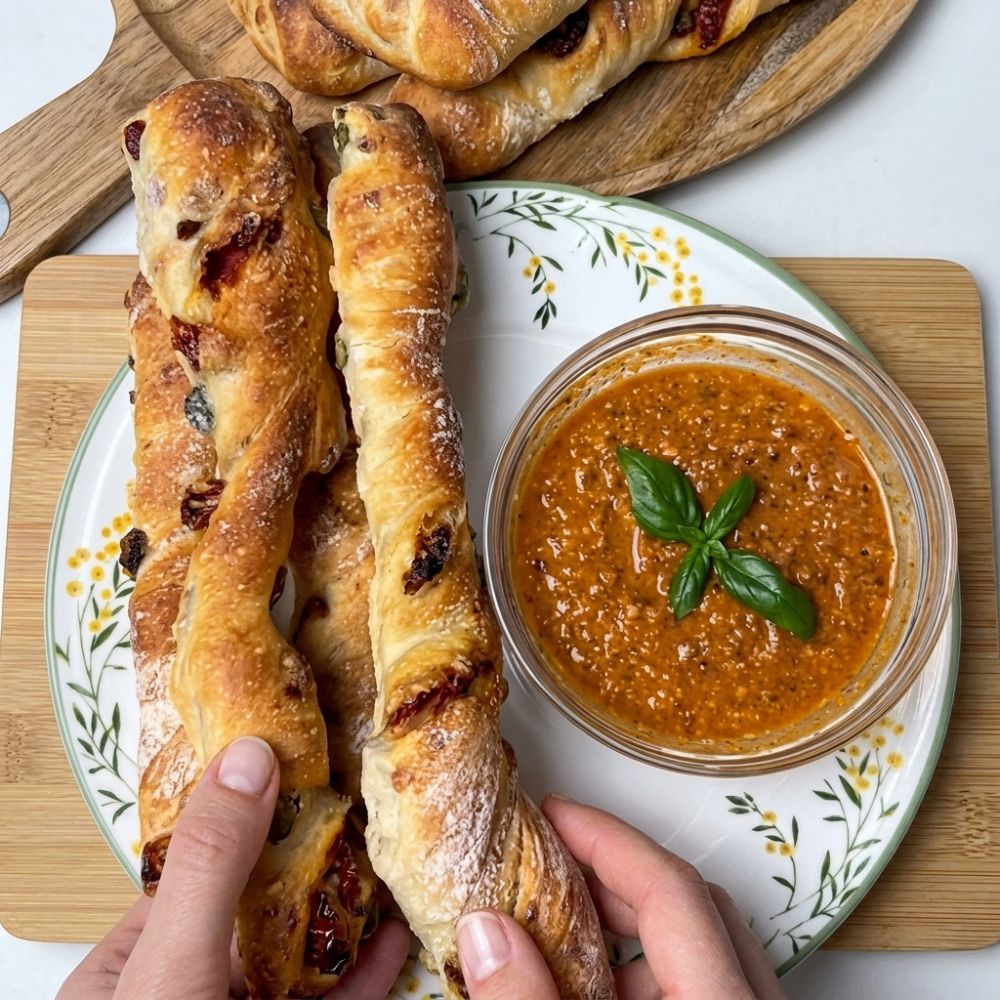
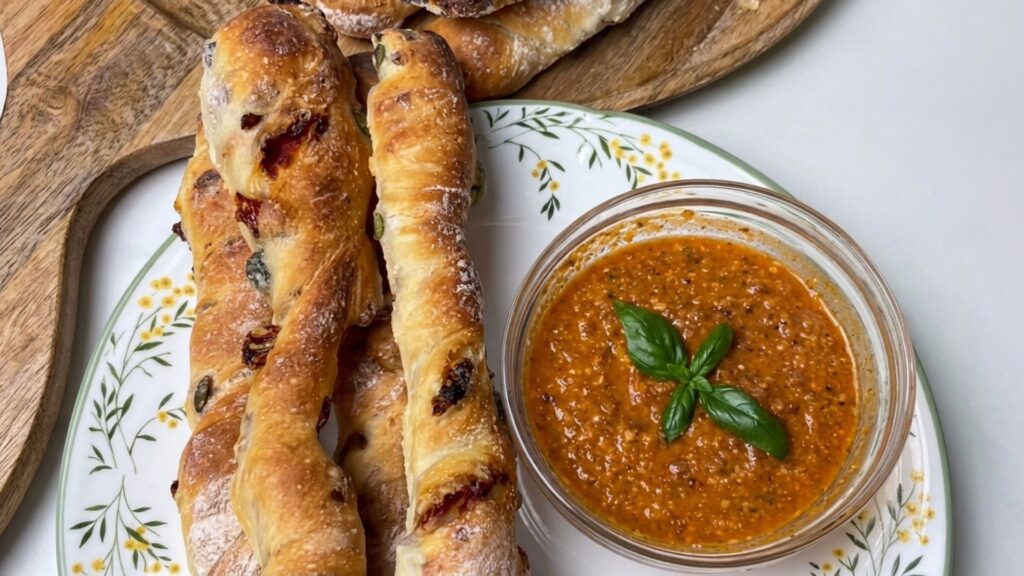
Fresh out of the oven, ready for dipping.
Serve these warm with your favorite dip. A tomato-based dip, a whipped feta, or even just good olive oil and a little extra sea salt all work. This is one of those recipes where everyone at the table ends up with a slightly different favorite way to eat it, and that's part of the fun.
If you want to understand more about why the overnight cold proof matters here beyond just convenience, my Sourdough Fermentation Guide walks through what's actually happening in the dough from starter to cold proof.
↑ Back to topSave this one for your next warm evening when turning on the oven still feels worth it.
More Recipes to Try