Roasted garlic goes soft and sweet in the oven, nothing like the sharp raw clove. Mash it into sourdough dough along with fresh herbs and it perfumes the whole loaf instead of just sitting on top as a garnish.
This is the single-loaf version of a recipe I bake often, scaled down from a two-loaf batch so you're not left doing math to cut it in half. Mixed in the morning, shaped in the evening, and baked the next day, it's a slower loaf, but most of that time is just waiting.
What's in this post
Why Roast the Garlic First
Raw garlic straight into dough is harsh and uneven, it can also throw off fermentation in a way you don't want to gamble on. Roasting mellows it into something closer to caramel: soft enough to mash with a fork, sweet instead of sharp. Slice the top off a whole head, drizzle with olive oil, sprinkle with sea salt, wrap it in foil, and roast until the cloves are deeply golden and squeeze out easily. Let it cool before mashing, you'll be mixing it straight into the dough by hand.
I don't have Ralu's exact oven temperature and roasting time recorded for this step yet, so I've left it general above. If you have a go-to (or want me to use the same one from the batch version), let me know and I'll lock it in before this goes live.
The Dough
Ingredients
- 400g strong bread flour (type 1)
- 280g water
- 95g active starter, fed 1:4:4 (starter:water:flour) the night before
- 7g salt
- 1 head garlic, roasted in olive oil and sea salt
- Mixed herbs: rosemary, oregano, thyme
A 1:4:4 feed (1 part starter, 4 parts water, 4 parts flour) gives you a strong, well-fed starter by morning without you having to think about timing twice. This is the ratio to reach for any time a recipe just calls for "well-fed" or "freshly fed" starter.
Mixing and Bulk Fermentation
Mix the flour, water, and starter together until no dry patches remain, then let the dough rest for 30 minutes so the flour can fully hydrate. Add the salt and mix it in well before moving into bulk fermentation.
From there it's one set of stretch-and-folds to start building strength, followed by coil folds spaced about 30 minutes apart. This loaf had an 11-hour bulk at a cool room temperature, around 20°C, starting at 8:30am and finishing shaping by 7:30pm. Your kitchen will run faster or slower than that, so watch the dough rather than the clock: it should look domed, slightly jiggly, and pull away cleanly from the sides of the bowl when it's ready.
If you want the fundamentals of stretch-and-folds and coil folds laid out step by step, my Plain Sourdough Loaf recipe walks through the same base technique this one builds on.
Working In the Garlic and Herbs
Add the mashed roasted garlic and mixed herbs during your second set of coil folds, not the first. By then the dough already has enough structure to take on the extra weight without losing air or tearing, so the garlic and herbs fold into the layers instead of clumping near the surface. I use this same timing for pretty much any mix-in, seeds, olives, dried fruit, whatever the loaf calls for.
This isn't a one-off. I use the same fold-it-in-later approach for flavor add-ins across most of my loaves, including the Turmeric and Black Pepper Sourdough, where the spices go in early instead but the folding logic behind building structure first still applies.
Shaping and Cold Proof
Once bulk fermentation is done, turn the dough out and preshape it into a loose round. Let it rest 20 to 30 minutes so the gluten can relax before final shaping. Shape with enough tension to hold its structure, then set it into a floured banneton.
Cold proof in the fridge for 14 hours. This long, cold rest is what develops the deeper flavor and that classic sourdough tang, and it makes the dough much easier to score straight out of the fridge.
Baking the Loaf
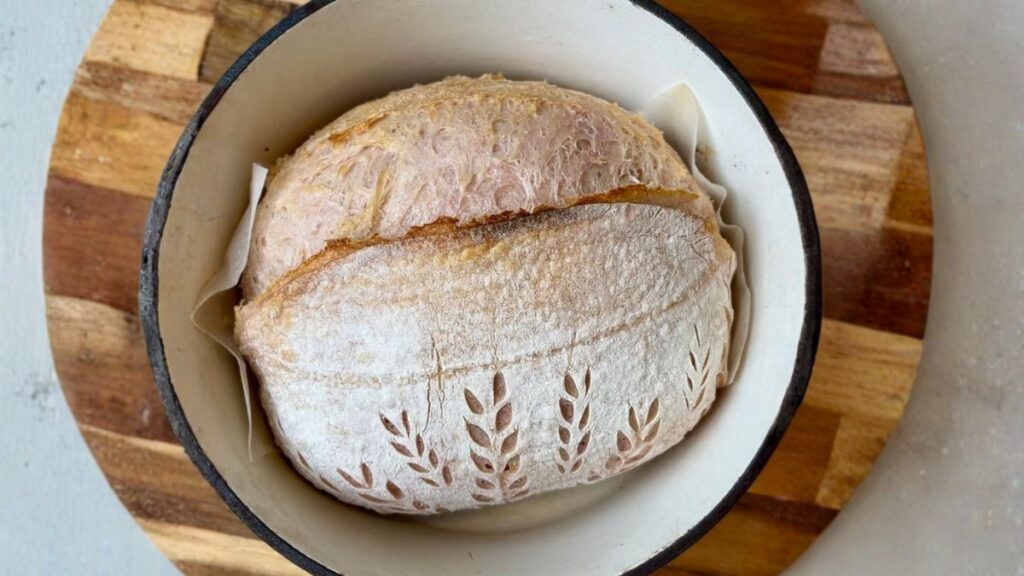
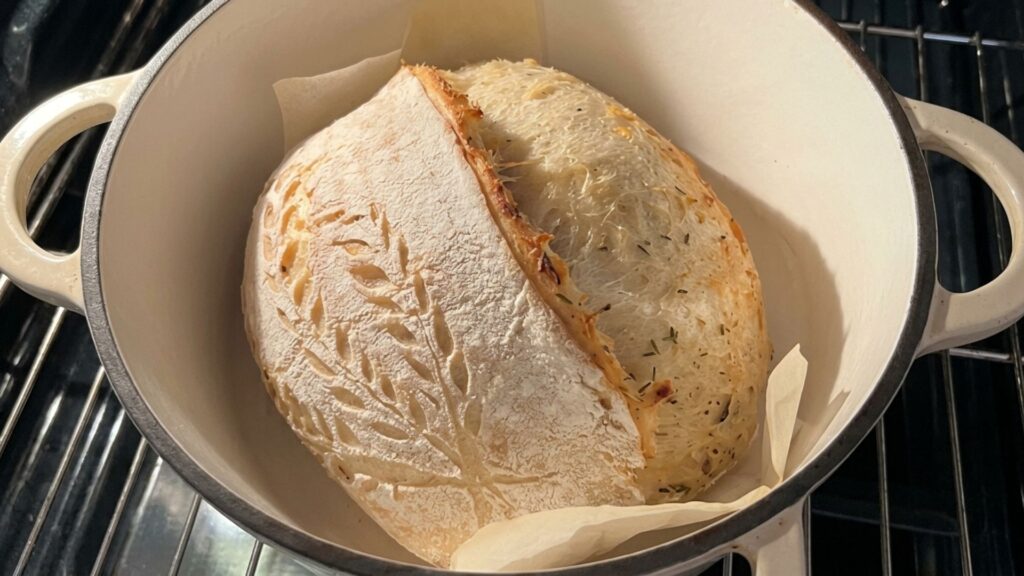
Preheat your oven with a Dutch oven inside at 235°C. Score the cold loaf, then bake covered for 25 minutes. Drop the temperature to 220°C, remove the lid, and bake uncovered for another 25 minutes until deeply golden. Let it cool on a wire rack for at least 30 minutes before slicing, it's still finishing its work inside even after it comes out of the oven.
- The night before, feed your starter at a 1:4:4 ratio so it's active and ready by morning.
- Roast the garlic: top sliced off, drizzled with olive oil, sprinkled with sea salt, wrapped in foil, roasted until soft and deeply golden. Cool, then mash.
- Mix the flour, water, and starter until no dry flour remains. Rest 30 minutes.
- Add the salt, mix in fully.
- First set: stretch-and-folds.
- Second set (30 minutes later): coil folds, working in the mashed roasted garlic and mixed herbs.
- Third and fourth sets: coil folds, 30 minutes apart.
- Continue bulk fermentation until well risen and jiggly, about 11 hours total at a cool room temperature.
- Preshape, rest 20-30 minutes, then final shape into a banneton.
- Cold proof in the fridge for 14 hours.
- Preheat oven with a Dutch oven inside to 235°C. Score the loaf.
- Bake covered 25 minutes, then uncovered at 220°C for 25 more minutes.
- Cool on a wire rack at least 30 minutes before slicing.
Roasted Garlic and Herbs Sourdough Bread
Ingredients
- 400 g strong bread flour type 1
- 280 g water
- 95 g active starter fed 1:4:4 the night before
- 7 g salt
- 1 head of garlic roasted in olive oil and sea salt
- mixed herbs: rosemary oregano, thyme
Instructions
- The night before, feed your starter at a 1:4:4 ratio (starter:water:flour).
- Roast the garlic: top sliced off, drizzled with olive oil, sprinkled with sea salt, wrapped in foil, roasted until soft and deeply golden. Cool, then mash.
- Mix the flour, water, and starter until no dry flour remains. Rest 30 minutes.
- Add the salt and mix in fully.
- First set of folds: stretch-and-folds.
- Second set (30 minutes later): coil folds, working in the mashed roasted garlic and herbs.
- Third and fourth sets: coil folds, 30 minutes apart.
- Continue bulk fermentation until well risen and jiggly, about 11 hours total at a cool room temperature (~20°C).
- Preshape, rest 20–30 minutes, then final shape into a banneton.
- Cold proof in the fridge for 14 hours.
- Preheat oven with a Dutch oven inside to 235°C. Score the loaf.
- Bake covered for 25 minutes.
- Bake uncovered at 220°C for 25 more minutes.
- Cool on a wire rack at least 30 minutes before slicing.
Once it's cooled, this loaf is good on its own with just butter, but it also holds up well next to a bowl of soup or torn apart for dipping in olive oil. The garlic mellows even further by the next day, so leftovers (if you have any) make excellent toast.
Craving more flavor-packed sourdough? Explore the full Bread archive for more loaves like this one.
See More Bread Recipes