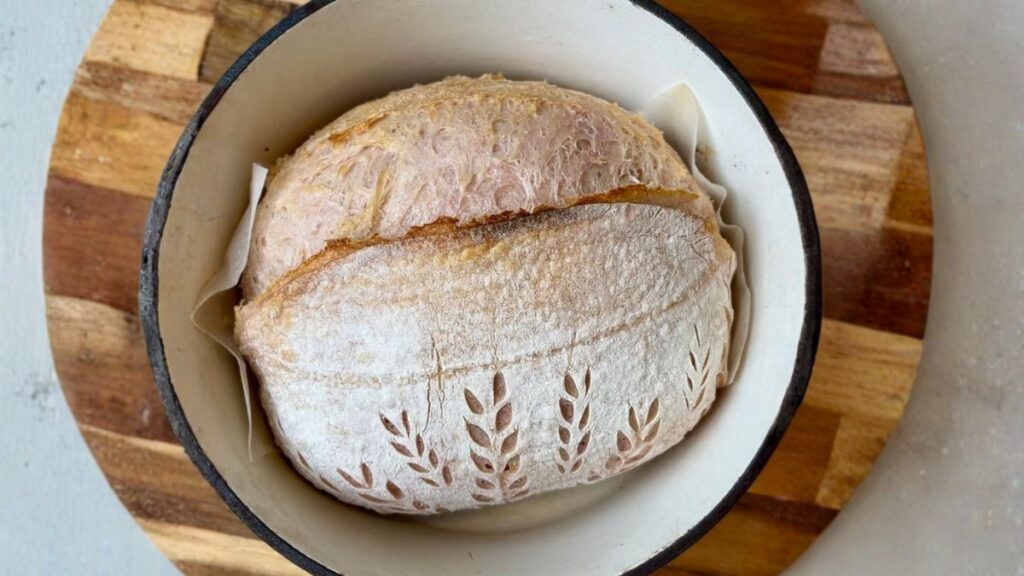
This one started as a Sunday habit. A while back I got into the rhythm of baking a new flavor every weekend just to keep myself curious, and tomato and herb is one I keep going back to.
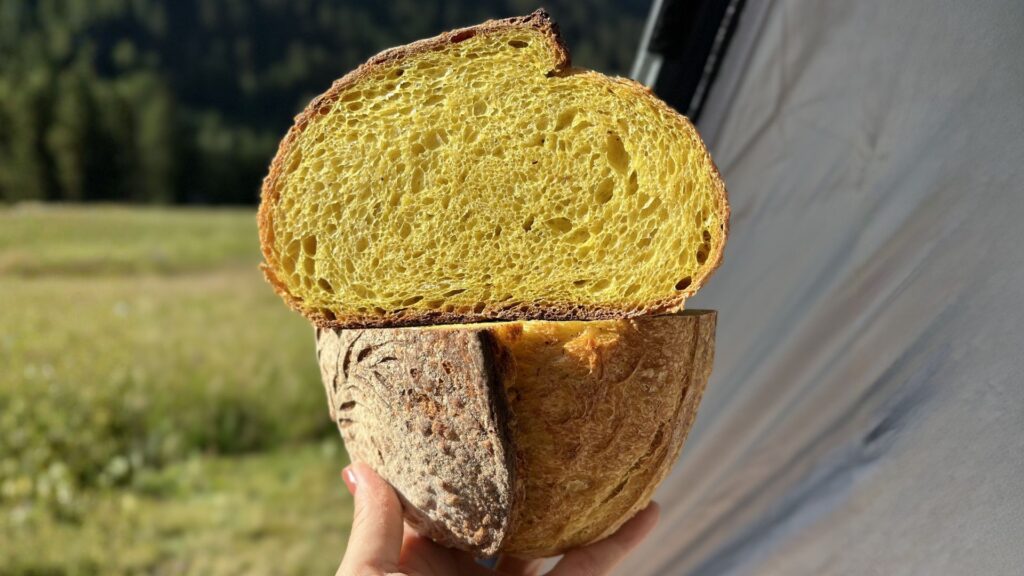
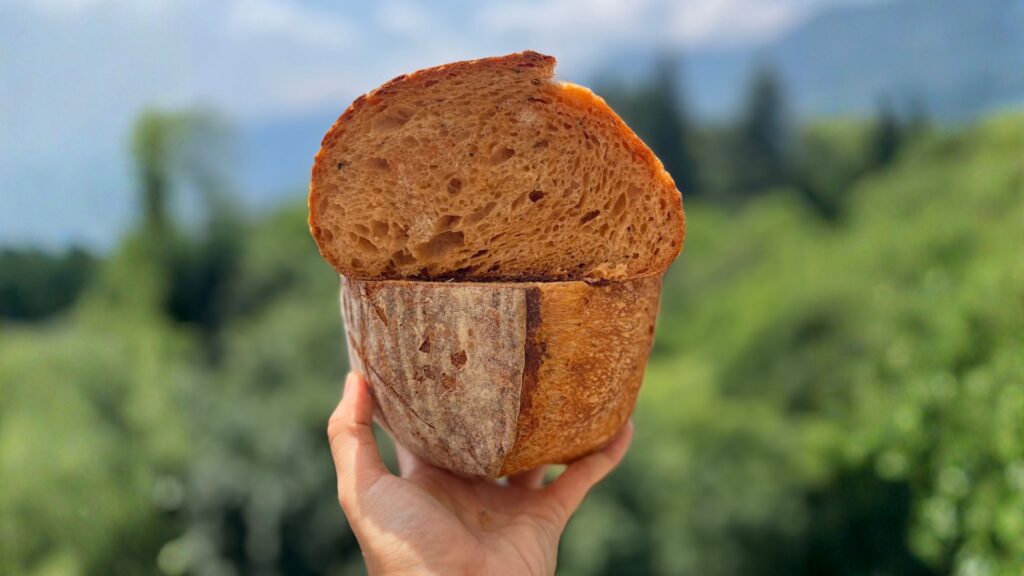
It's a savory loaf built on a durum wheat and bread flour blend, with tomato paste and dried herbs mixed right into the dough. The color alone makes it worth the bake, and the crumb has a little more chew than my usual white loaf.
Why This Flour Blend Works
Most of my loaves lean on bread flour alone. This one swaps in durum wheat semolina for part of the mix, which is the same flour I use for my sourdough ciabatta. It gives the crumb a slightly golden tone and a bit more bite, and it plays well with the tomato paste instead of getting lost under it.
After mixing, I run a quick windowpane test. Stretch a small piece of dough thin between your fingers. If it stretches into a translucent sheet without tearing right away, the gluten is where it needs to be before bulk fermentation starts.
What You'll Need
Tomato and Herb Sourdough Bread
- 300g bread flour
- 100g durum wheat semolina
- 270ml water
- 75g active levain
- 9g salt
- 20g tomato paste concentrate
- 2 tsp dried mixed herbs (oregano, thyme, rosemary)
- 8ml olive oil
How to Make Tomato and Herb Sourdough Bread
- Autolyse. Mix the bread flour, durum semolina, and water. Rest for 1 hour.
- Add the flavor. Add the starter, mix to combine, then add the salt, tomato paste, and dried herbs.
- Develop the dough. Mix on low speed in a stand mixer for 6 minutes, then run the windowpane test to check the gluten.
- Bulk ferment. Do 3 to 4 sets of coil folds, 30 minutes apart, until the dough passes the visual cues above.
- Shape and cold retard. Shape into a boule or batard, whichever your banneton fits best, and refrigerate overnight.
- Bake. Bake on a preheated steel or stone at 240°C (465°F) with steam for 25 minutes, then drop to 220°C (430°F) without steam for another 25 minutes.
Getting the Shape Right
I've had readers ask why bother shaping at all when the dough could just go straight into a pan. Fair question, but this is one of the few steps in my process I won't call optional. Skip it and the loaf loses the structure that holds it together in the oven.
Baking on a Steel
A baking steel or stone gives you a strong bottom heat, which this loaf wants given how much is packed into the dough. If you don't have a Dutch oven for steam, ice cubes near the loaf plus a pot of boiling water on the lower rack does the same job.
Let the loaf cool on a rack for at least 30 minutes before you slice in. It's tempting to cut it warm, but the crumb is still setting.
This is part of a running "Sourdough Sunday" habit for me, a new flavor most weekends just to keep things interesting. Tomato and herb has earned its spot as a repeat.
↑ Back to topBaked this one? Tell me how your crumb turned out, good or a little wonky, I want to see it.
Browse more recipes