Ciabatta has a reputation for being fussy. Really it's the opposite. This dough is wet, loose, and a little jiggly, and that's exactly what gives it the open, holey crumb ciabatta is known for. You just have to let go of the urge to add more flour and fix it.
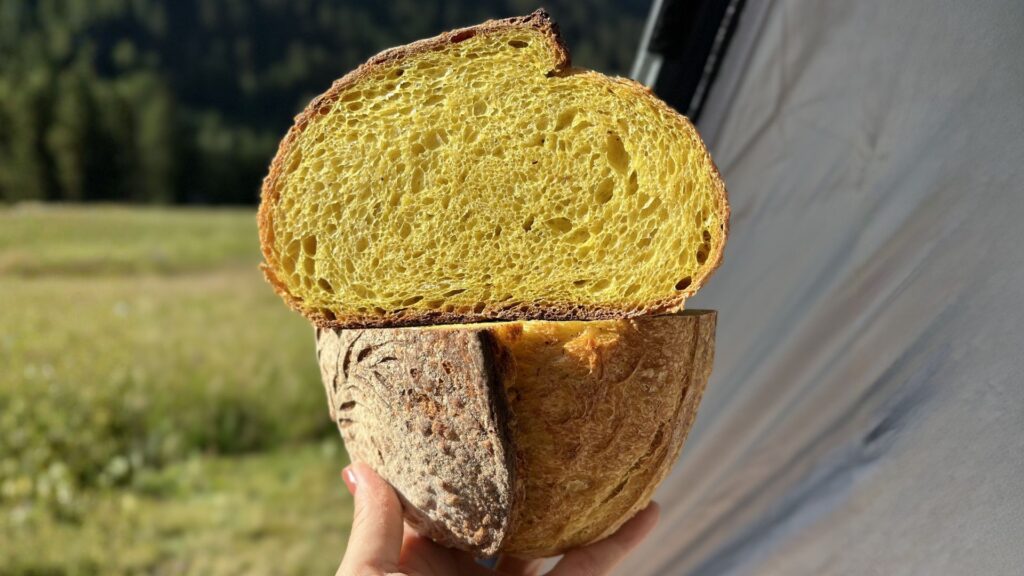
I make this one with durum wheat semolina instead of straight bread flour. It gives the crumb a pale gold color and a flavor that's a bit nuttier than a standard ciabatta, with almost no hands-on time once the dough is mixed.
What You'll Need
This is a lean dough. No enrichment, no add-ins, just flour, water, starter, and salt doing all the work.
Ciabatta Dough
- 400g durum wheat semolina flour (Senatore Capelli, 12% protein)
- 330ml water
- 85g active starter (100% hydration)
- 8g salt
- 8g olive oil (optional)
Senatore Capelli is a Sicilian durum wheat variety, and it's worth seeking out if you can find it. Regular durum semolina works too, the crumb color and nuttiness will just be slightly milder.
Working With Wet Dough
At this hydration, the dough will stick to your hands, the bowl, and the counter. That's normal, not a sign something went wrong.
Wet your hands before every fold instead of reaching for more flour. A dry dusting on the counter for shaping is fine, but flour worked into the dough itself will tighten the crumb and undo the openness you're after.
If you've made my plain sourdough loaf, the fold pattern here will feel familiar. Ciabatta just asks you to trust a much looser dough than you're probably used to handling.
Bulk Fermentation
Skip the clock on this one. Bulk fermentation is done when the dough has risen 50-75% in volume and looks bubbly and jiggly when you nudge the bowl.
Puffed and domed on top, with visible bubbles at the surface. When you gently shake the bowl, the whole mass should wobble like a loose jelly. If it barely moves, give it more time.
Step by Step
- Mix. Combine the flour, water, and starter until no dry bits remain. Rest 30 minutes.
- Add salt. Mix in the salt (and olive oil, if using) until fully incorporated.
- Fold. Do 4 sets of stretch-and-folds or coil folds, spaced 30 minutes apart, over the first 2 hours.
- Bulk ferment. Let the dough continue fermenting until risen 50-75%, bubbly, and jiggly.
- Optional cold ferment. For deeper flavor and a crisper crust, move the dough to the fridge overnight instead of baking same-day.
- Divide. Turn the dough onto a well-floured surface and gently stretch it into a rough rectangle. Divide into 8 small pieces, or 4-6 for bigger ciabatta.
- Proof. Let the pieces rest at room temperature for about 45 minutes.
- Bake. Bake on a preheated stone, steel, or tray at 240°C (465°F) with steam for 15 minutes, then drop to 220°C (430°F) for 15-18 minutes more, until deep golden.
A Few Notes on Shaping and Baking
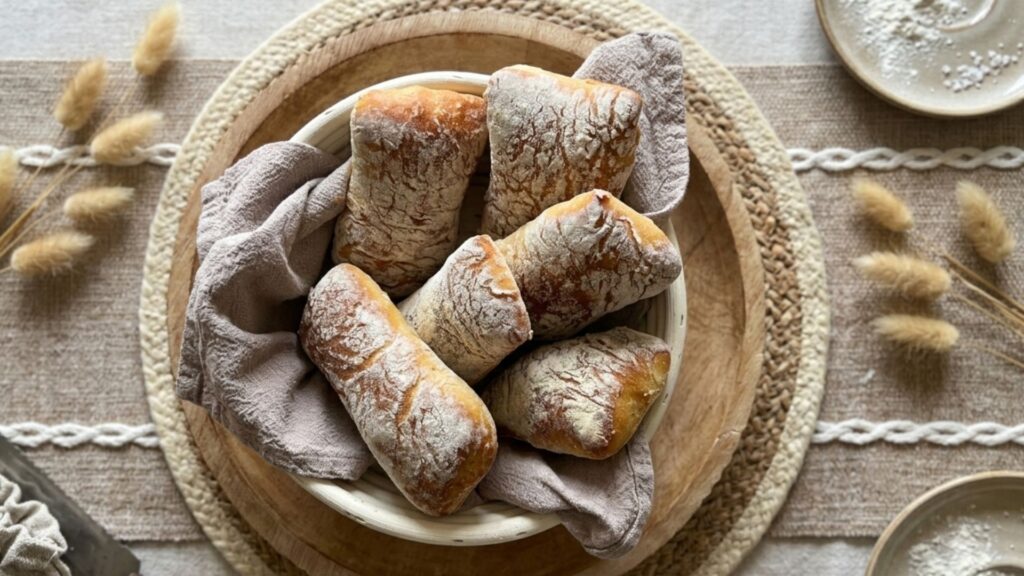
Smaller pieces bake faster and give you more crust per bite. Bigger ciabatta gets you that classic wide, irregular hole structure, but takes a bit more care when you move it onto the tray. Neither one is more correct, pick based on what you're making them for.
The cold ferment step is genuinely optional here. Baking same-day gets you a good ciabatta with a milder flavor. Letting it sit overnight in the fridge gets you more tang and a slightly crisper crust, closer to what you'd get from my sourdough baguettes, another lean dough that rewards a slow, hands-off approach.
Don't skip the steam for the first stretch of baking. It's what keeps the crust soft long enough for the dough to fully expand before it sets.
Back to topTry this one and tell me how the crumb turned out, good or ugly, I want to see it.
See More Recipes